
CAMARA CAVE PAINTINGS
This small cave, also known as Abrigo de la Sangre, is located in the Camara mountains, in the Miñón area, 713 metres above sea level. Inside, there is a collection of cave paintings, discovered in 1988 by the “Amigos de la Historia” group from Sax. The paintings, classified as an Asset of Cultural Interest, have been part of the first section of the General Inventory of Valencian Cultural Heritage since 2010.
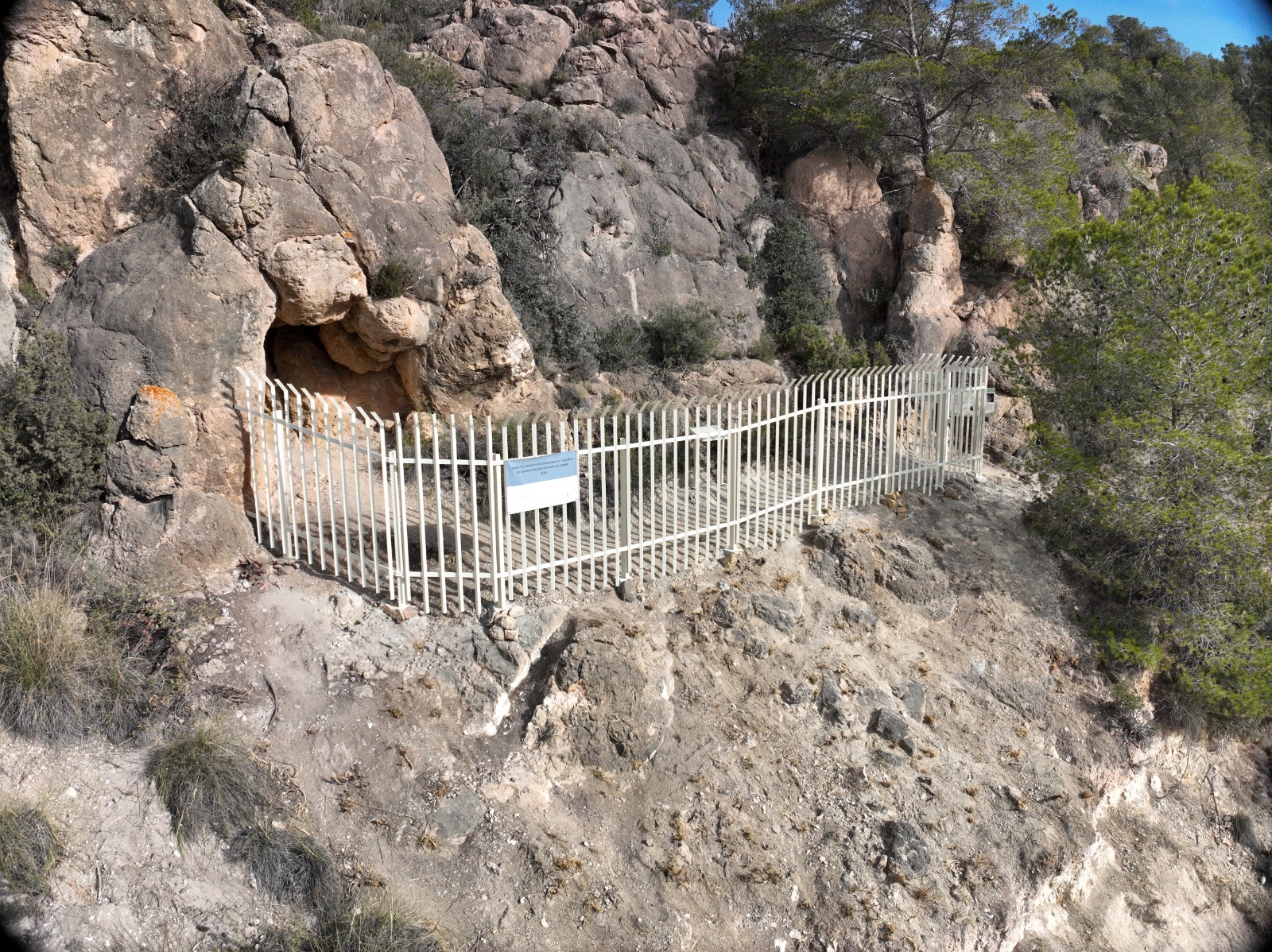
What can be seen in the cave?
Cave art is an exceptional heritage, but also a very fragile one. In this shelter, the only clearly recognisable figure is a Latin cross, badly damaged by the passage of time and atmospheric agents. Its dimensions are: 12.6 cm in the vertical line, with a thickness of 2.5 cm, and 12 cm in the horizontal line, with a thickness of 2 cm. To its right there are also two elongated or pointed oval-shaped marks with irregular outlines and unidentified motifs. The mark closest to the cruciform motif is 25 cm long, while the furthest one is 11.5 cm long. The paintings were made with reddish pigments based on iron oxide (ochre).
Traditionally, these paintings have been considered part of the prehistoric Schematic Art of the Mediterranean arc and, as such, have been listed as UNESCO World Heritage since 1998. In this regard, it was suggested that the cross-shaped motif could be a cruciform human figure. However, due to their technical characteristics, the type of representation and their location—far from the schematic territory of Alicante—the paintings should be related more to historical moments, pointing to a medieval or modern chronology, rather than prehistoric times.
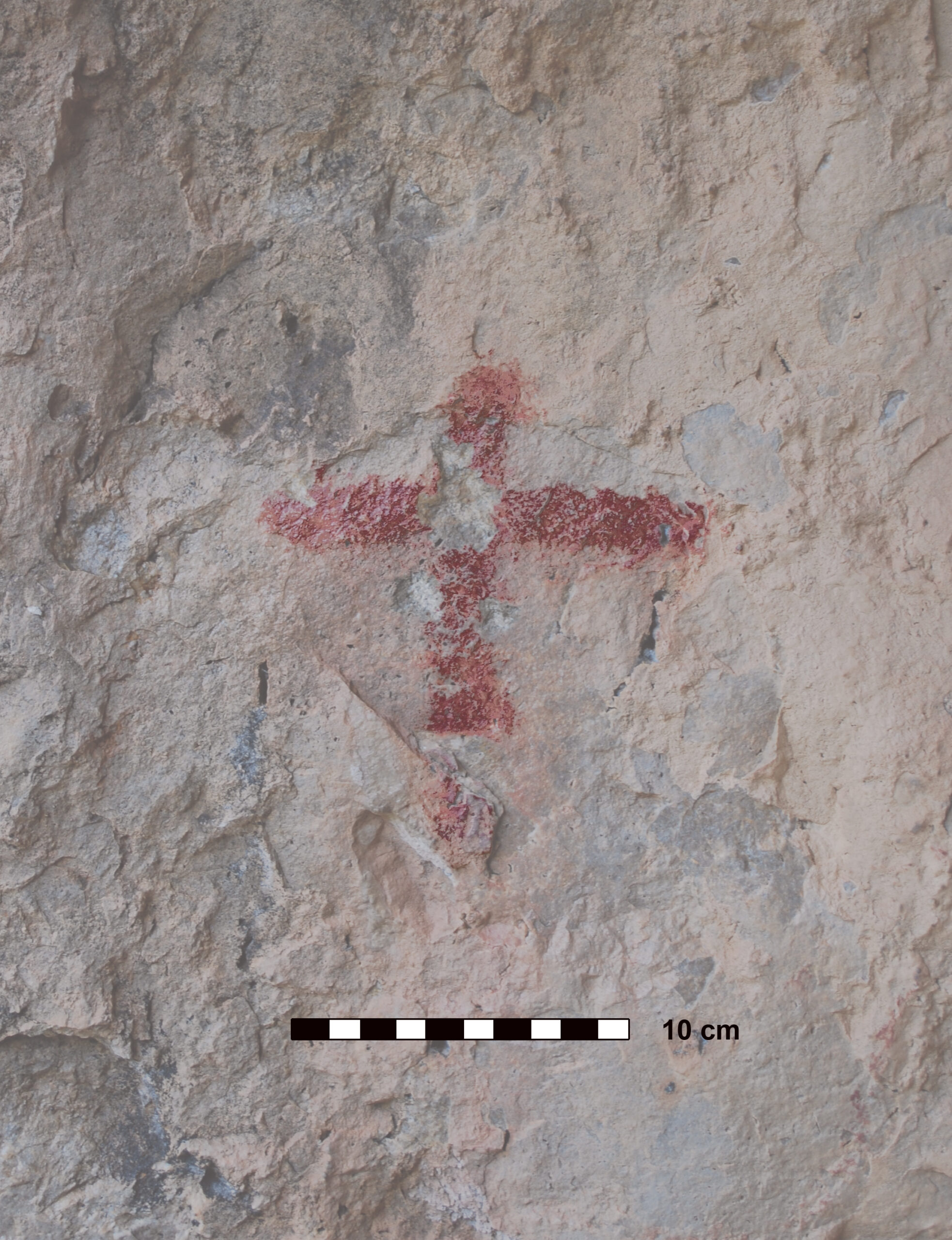
What is the meaning of these paintings?
Although less common in cave paintings, these types of cross-shaped symbols frequently appear on the walls of houses, castles and palaces, especially next to doors and windows. Although we do not know their purpose with certainty, their presence could be due to a common tradition: the use of the cross as a religious and protective symbol, intended to ward off evil and provide protection to those who lived in or passed through these places. They were also placed in strategic locations to ward off danger or misfortune: on municipal boundaries, next to roads and cattle tracks, near springs or in work areas such as cattle pens or apiaries.
Other traces of cave art
This territory preserves a rich archaeological heritage, although examples of cave art are rare. Among the few known examples are the Cueva Santa cave in Caudete, with schematic paintings from the Neolithic period, dating back some 7,500 years, and the enclave of La Centenera in Pinoso, where engravings of bowls and channels, possibly from the Bronze Age, dating back some 4,500 years, have been preserved.
From the historical period, the site of Les Grallaetes in Camp de Mirra stands out, with engravings in the form of grids, lattices and small cup marks and grooves, which some researchers interpret as heraldic signs made during the signing of the Treaty of Almizra in 1244, which established the boundaries of the Kingdom of Valencia.
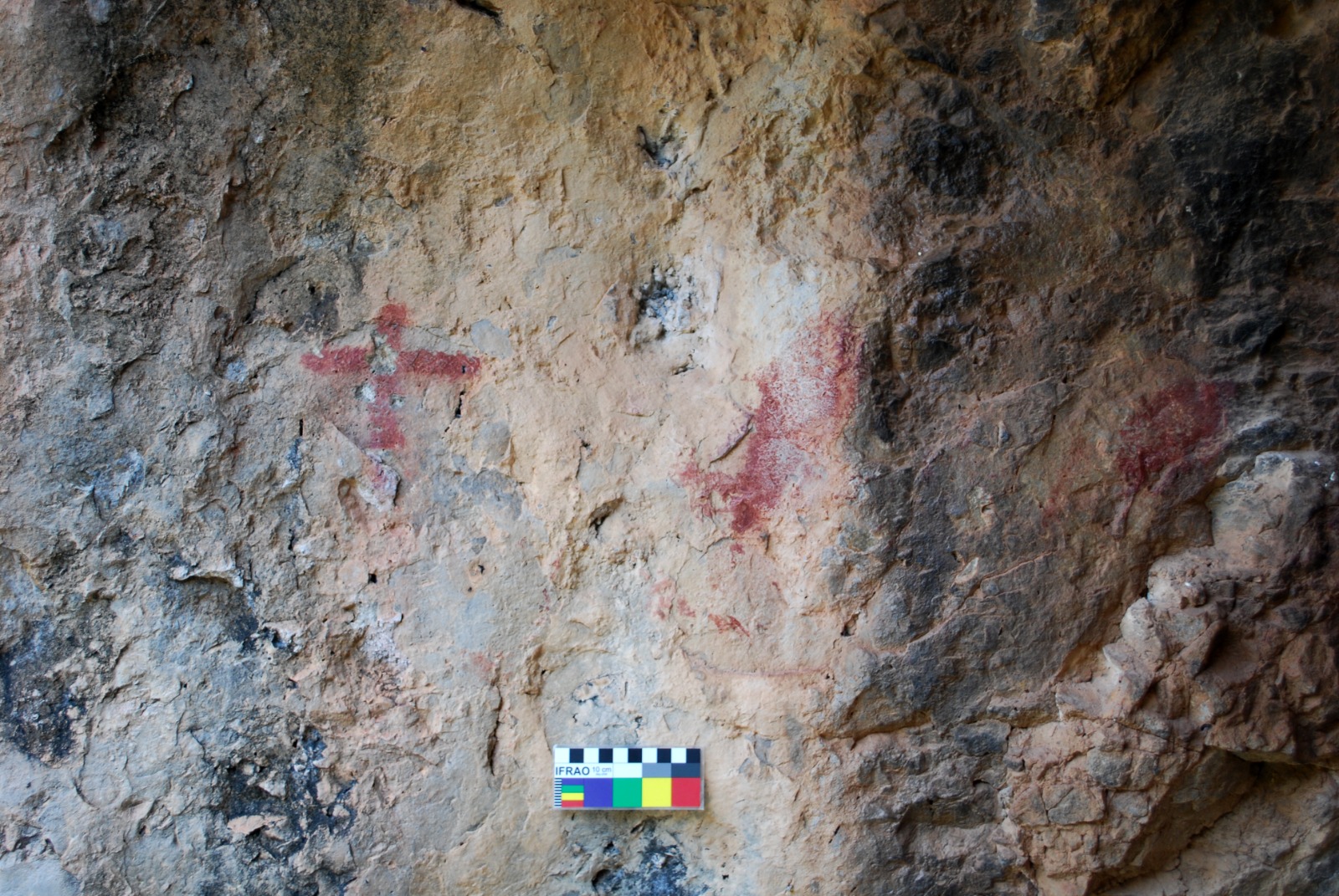
Heritage value of the Camara mountains and its surroundings
In addition to the cave paintings, at the top of Camara, some 820 m above sea level, is the archaeological site of Camara, with fortified remains from the protohistoric period (8th-6th centuries BC) and the late Roman period. In the surroundings of the Camara mountains is the hamlet of Estudiante, as well as the remains of dry stone constructions, the royal cattle track (Cañada Real) from Andalusia to Valencia and the Serranos path.
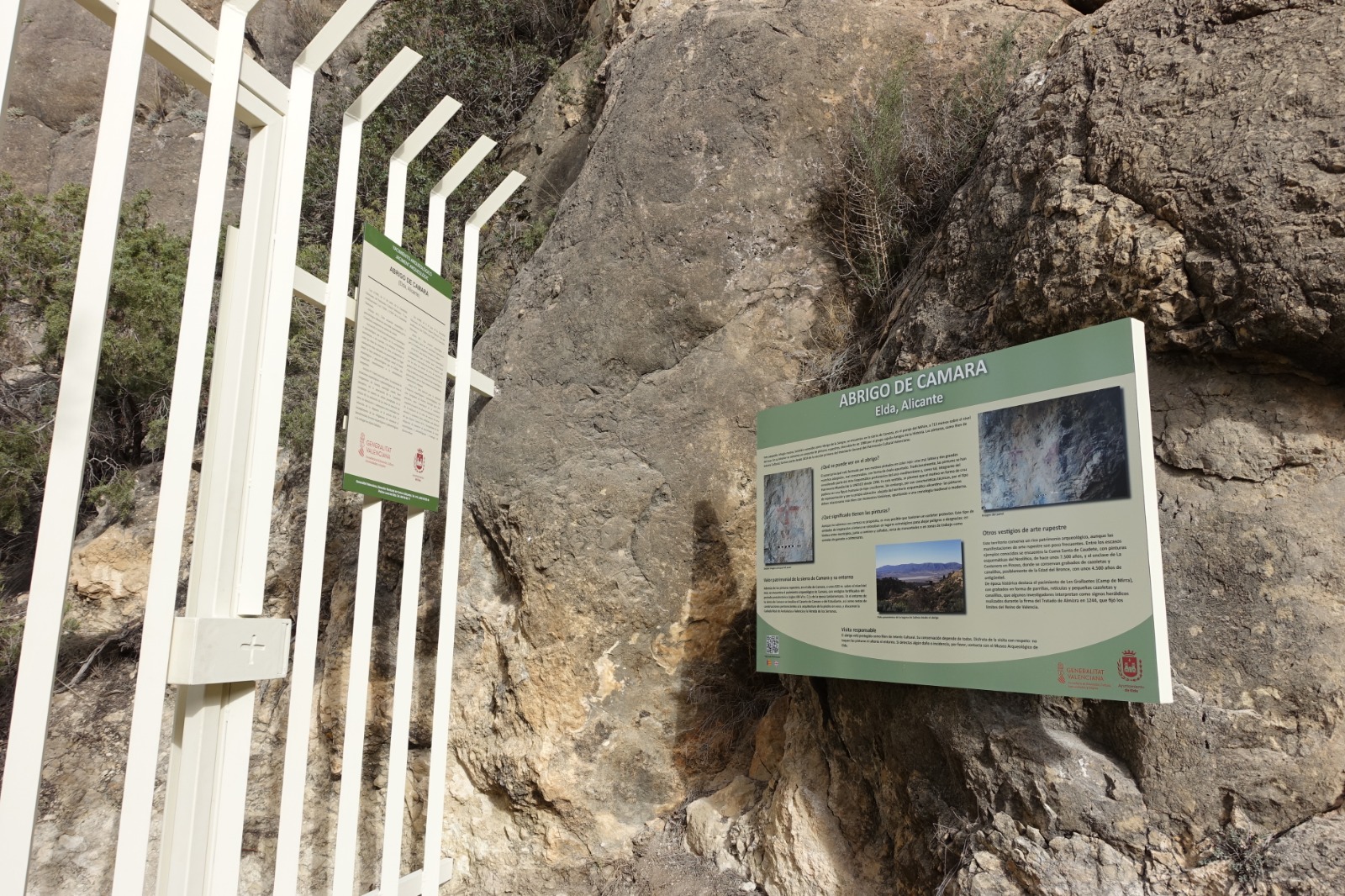
Responsible visit
The shelter is protected as a Site of Cultural Interest. Its conservation depends on everyone. Enjoy your visit with respect: do not touch the paintings or alter the environment. If you detect any damage or incident, please contact the Archaeological Museum of Elda.